ETL and ELT are two leading approaches for transferring and processing data from various sources into centralized storage systems. Both methods involve three key stages: extract, transform, and load. The main difference between them lies in the order of these stages, which has a critical impact on performance, architecture, and system use cases. Despite the similarity in acronyms, ETL and ELT approaches serve different purposes in data integration and are chosen based on business scale, available resources, and the type of analytics required. In this article, we will take a closer look at each method, their advantages, disadvantages, and key differences. What is the difference between ETL and ELT?
- What is ETL
- A Brief History of ETL
- The ETL Cycle
- Advantages and Disadvantages of ETL
- What is ELT
- ELT Cycle
- Advantages and Disadvantages of ELT
- Key Stages of ETL and ELT Processes
- Data Extraction (Extract)
- Data Transformation (Transform)
- Data Loading (Load)
- Comparison of ETL and ELT Processes
- When to Choose ETL and When to Choose ELT
- Conclusion
What is ETL
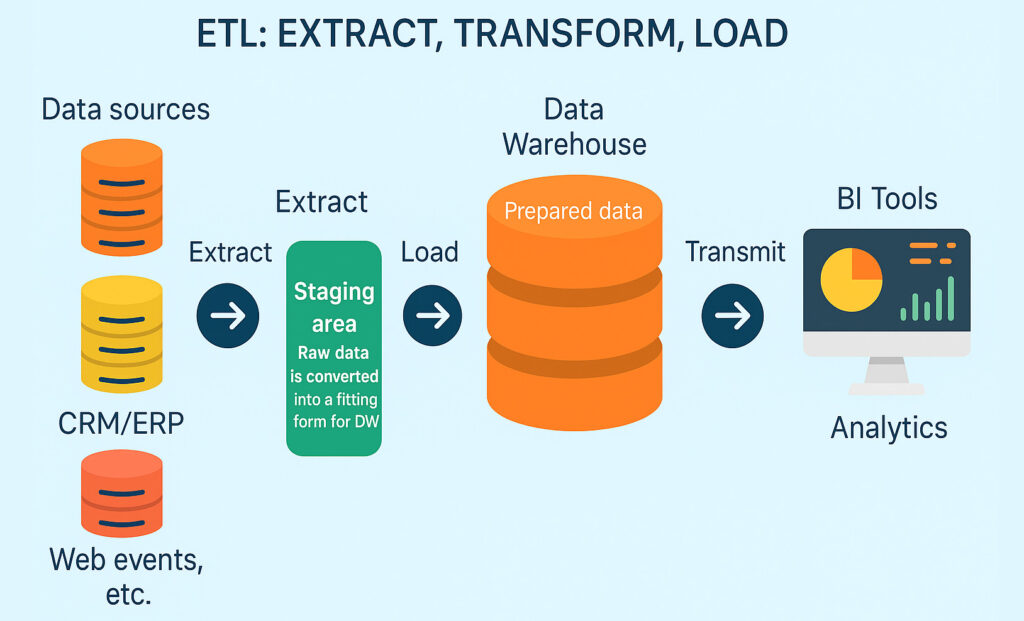
ETL (Extract, Transform, Load) is a classic data preparation process in which information is extracted from various sources, pre-processed in a temporary storage area, and then loaded into the final analytical system. This method is widely used when working with relational databases and traditional data warehouse (DWH) systems, especially in building OLAP (Online Analytical Processing) analytics.
Stages of ETL:
- Extract – The extraction of raw data from various sources such as CRM systems, ERP platforms, files, APIs, and more.
- Transform – Normalization, filtering, aggregation, and other data transformations to bring the data into a unified structure.
- Load – Loading the processed data into the target storage, optimized for analytical queries.
ETL is ideal for systems where a strict data structure is essential and pre-load validation is required. It provides high accuracy, control, and convenience when building reports.
A Brief History of ETL
The ETL technology originated back in the 1970s — an era when enterprises began striving for centralized data storage. At that time, the need arose to move data from scattered sources into a single repository. These early efforts were far from perfect, but they laid the foundation for future data processing systems.
A real surge of interest in ETL came in the late 1980s and early 1990s, when the concept of the data warehouse moved to the forefront of corporate IT infrastructure. Companies were faced with the growing need to systematize information flows from various operational systems — ERP, CRM, accounting databases, internal reports. It wasn’t enough just to transfer the data — it had to be cleaned, formatted, deduplicated, and standardized, all with high accuracy.
This gave rise to the first specialized ETL tools. Of course, they were quite primitive compared to modern solutions. There were no distributed computing systems or real-time processing — only the basic steps: extract, transform, load. Yet even these simple mechanisms solved the key challenge of the time: ensuring data consolidation.
As information technologies evolved, so did the volume of data. Warehouses matured from on-premise servers to more powerful DWH platforms. ETL platforms became increasingly intelligent, incorporating validation mechanisms, logging, and automated failure recovery. Graphical interfaces emerged, along with integration with BI tools and task schedulers.
However, in the late 1990s and especially the early 2000s, the analytics market underwent a shift that permanently changed how data processing was approached. The rise of cloud technologies, the expansion of the internet, the explosion of unstructured data, and the emergence of Big Data technologies like Hadoop and Spark transformed the landscape. This was when alternatives such as ELT began to take shape — where processing and transformations moved inside the storage itself.
The ETL Cycle
The ETL cycle (Extract, Transform, Load) is a logically structured sequence of operations for transferring, transforming, and loading data into analytical or enterprise storage systems. It forms the backbone of any business intelligence system where accurate, structured, and clean information is essential.
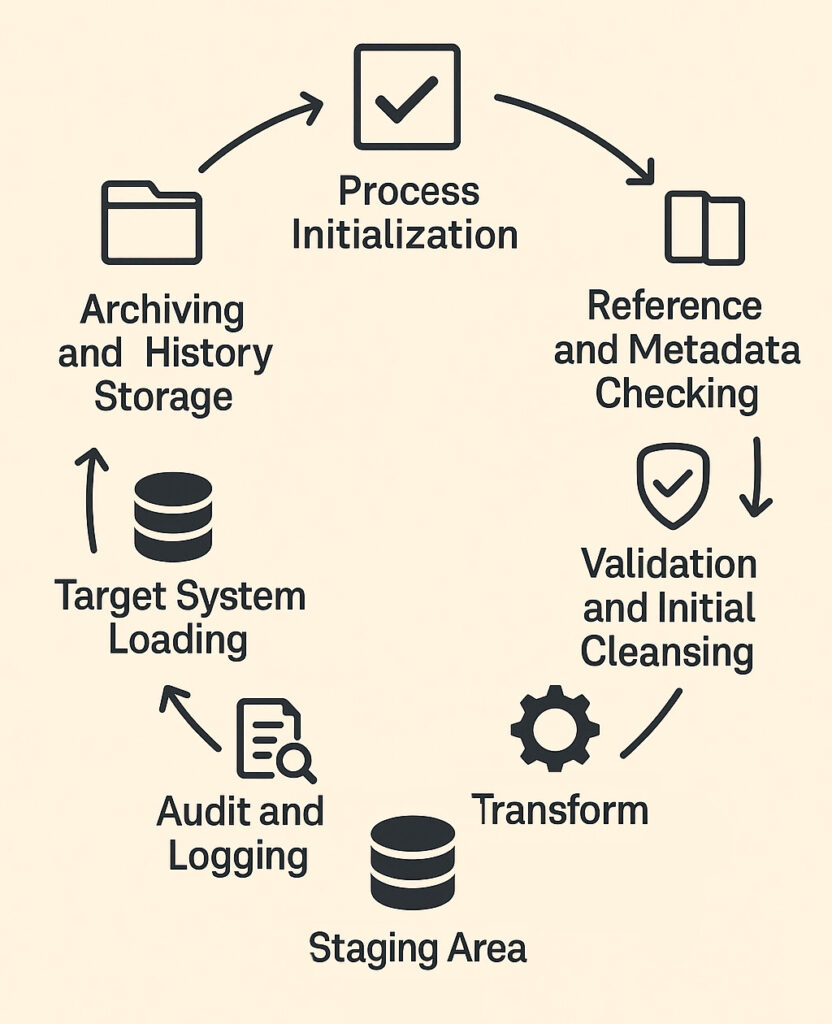
Although each company may implement ETL processes in its own way, there is a common understanding of the standard phases.
- Process Initialization. Everything starts with preparation: the schedule is configured, configuration parameters are loaded, and logging systems are activated. Sometimes, the process is triggered by an external system — such as a CRM, ERP, or cloud service. The goal of this phase is to prepare the ground for the proper execution of the entire pipeline.
- Reference and Metadata Handling. Before working with the core data, it’s important to ensure that reference tables and supporting information are up to date — such as country codes, currency lists, status dictionaries, or classification schemas. These serve as the context for interpreting values in data streams and are often referred to as the semantic layer in analytics.
- Data Extraction (Extract). At this stage, data is pulled from internal or external systems: databases, APIs, log files, Excel documents, or cloud storage. Extraction can be full or incremental, depending on how often the source data changes. This step produces the raw dataset that will undergo transformation.
- Validation and Initial Cleaning (Validate). Data errors are common — missing values, incorrect formats, duplicates, unrecognized characters. These are either filtered out or logged. Some ETL scenarios apply “soft” and “hard” validation rules: the former flags suspicious records, the latter rejects them entirely. This stage is critical for ensuring data quality.
- Transformation and Normalization (Transform). This is the most intensive phase of the process. Data is sorted, standardized, joined, aggregated, and reformatted. Calculations are performed, data types are converted, and records from various structured sources are aligned. Often, this is where business logic is applied — for example, calculating revenue with discounts, renaming categories, or converting currencies.
- Temporary Storage (Staging Area). Before final loading, data is often saved in an intermediate zone. This allows for consistency checks, batching of large volumes, and performance optimization. The staging area serves as a buffer — especially in high-load systems or batch processing workflows.
- Audit and Process Reporting. How do we know the process completed successfully? Audit logs help answer this. They show how many rows were processed or rejected and where errors occurred. Logs may include process IDs, timestamps, batch numbers, and error messages — crucial for transparent and traceable data operations.
- Result Publication (Load). Processed data is loaded into the target analytical system — typically a classic data warehouse, a data mart, or a cloud-based platform (e.g., Snowflake, BigQuery, ClickHouse). From here, BI tools, reporting systems, executives, and analysts can access the data. It’s important to adhere to the correct loading method — full overwrite, incremental load, merge, etc.
- Archiving and Historical Storage. After loading, data — especially logs, source files, and intermediate tables — may be archived. Archiving ensures repeatability of the process, rollback capability, and historical analysis. These data sets are typically stored in separate databases, file systems, or cloud platforms like S3 or Azure Blob.
A well-designed ETL cycle is more than just a sequence of steps — it’s a comprehensive infrastructure for preparing and delivering data. It ensures consistency, transparency, and high data quality, which are critical for business analytics, reporting, strategic planning, and fact-based decision-making.
Advantages and Disadvantages of ETL
Advantages of ETL:
- Flexibility and Control. ETL provides fine-grained control over extraction, transformation, and loading steps. It allows the implementation of complex business rules and logic.
- Load Distribution. Transformations occur outside the database, which reduces the load on the target DBMS and improves system performance.
- Parallel and Batch Processing. ETL supports large-scale data processing in batch or streaming modes. Parallelism and partitioning can significantly accelerate execution time.
- Integration from Multiple Sources. ETL enables the consolidation of data from diverse systems such as ERP, CRM, APIs, and flat files into a single, unified data set.
- Platform Independence. ETL processes are not tightly coupled with a specific target system, offering compatibility with various databases and BI tools.
Disadvantages of ETL:
- Additional Costs:
- Licensing or development of custom ETL tools may be required.
- Separate servers and ongoing maintenance increase infrastructure expenses.
- Architectural Complexity:
- ETL introduces an additional layer into the data architecture.
- It increases the number of failure points and the need for continuous monitoring.
- Performance Bottlenecks:
- Moving data between systems can create slowdowns.
- Intermediate steps like staging may further impact processing speed.
- Need for Skilled Professionals. Developing, maintaining, and troubleshooting ETL pipelines requires experienced specialists with strong domain knowledge.
- Limited Scalability Flexibility. As data volumes grow, the ETL architecture may require a complete overhaul to maintain performance and efficiency.
What is ELT
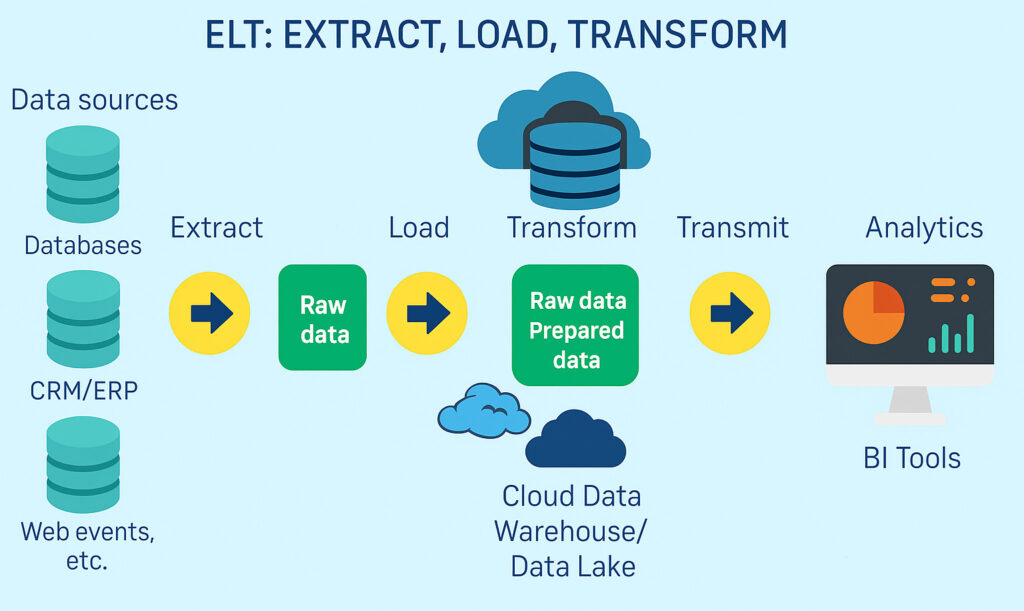
ELT (Extract, Load, Transform) is a more modern approach that gained traction with the rise of cloud-based storage systems and Big Data platforms. In this method, data is first extracted and immediately loaded into the target repository, and only then transformed within a powerful analytical environment (such as Snowflake, BigQuery, or Azure Synapse).
Stages of ELT:
- Extract – Collecting raw data from various sources without any preliminary processing.
- Load – Quickly loading the data into a cloud-based or distributed storage system.
- Transform – Performing transformations within the storage system using its built-in computational resources.
The ELT approach is effective when working with large volumes of unstructured data and leveraging scalable computing resources. It simplifies the architecture by eliminating intermediate storage layers and is well-suited for modern analytical platforms.
ELT Cycle
The ELT (Extract, Load, Transform) method has become especially relevant with the rise of cloud technologies, scalable analytics platforms, and the overall growth of data volumes. Unlike traditional ETL, the focus here shifts: the main transformation workload falls not on intermediate servers, but on the storage itself, which is capable of performing in-place computations.
The modern ELT cycle is not just a sequence of actions. It’s a flexible and adaptive process that can include both traditional stages and additional phases related to big data, automation, and CI/CD integration.
- Environment preparation (initialization). Before the process starts, configuration scripts are executed, pipelines are activated, API keys are connected, and links to data sources and target repositories are established. All of this happens automatically—often within orchestrator systems such as Apache Airflow, Prefect, or dbt Cloud.
- Data extraction (Extract). The first phase is information collection. This may include structured data from PostgreSQL, MySQL, Oracle, or unstructured streams like JSON from APIs, log files, or IoT sensor data. Sources vary: cloud CRMs, marketing platforms, file systems. The key goal is to minimize the impact on production systems and gather up-to-date information.
- Loading into storage (Load). A distinctive feature of ELT is that data is loaded directly into the target repository—most often scalable cloud-based DWH systems such as Snowflake, Google BigQuery, Amazon Redshift, or Azure Synapse. At this stage, data is still “raw”—it remains unmodified and resides in a raw layer. Speed and reliability of loading play a key role here.
- Transformation within the storage (Transform). This is the most important stage. All transformations are performed inside the storage itself: using SQL scripts, UDFs, window functions, or procedures. This leverages the platform’s computing power (e.g., MPP architecture), scales the load, and allows for parallel processing of massive data volumes. Transformations may include:
- cleaning and filtering;
- aggregation;
- joins between tables;
- mapping and type casting;
- calculating metrics and KPIs.
- Presentation layers (Data Marts, Views). After transformation, data is often split into layers: cleaned layer, data marts, BI views (logical views). This helps manage access, improve dashboard performance, and scale analytics for departments or teams.
- Logging and audit (Audit & Monitoring). Monitoring is crucial. Modern ELT solutions include automated load monitoring, error logging, anomaly reports, and alerts via Slack, Telegram, or email. This is especially important for daily, nightly, or streaming loads.
- Integration with BI and analytics (Publish & Access). Final data becomes accessible to business users and analytics platforms such as Power BI, Tableau, Looker, or Superset. Connections are made directly to the storage layer, without additional intermediate layers, which speeds up data access.
- Archive and versioning (Archive & Versioning). Everything extracted and transformed can be stored in archive layers—for recovery, change history (SCD), audit, or reprocessing. Approaches like time-travel (e.g., in Snowflake) and table versioning are used.
The ELT cycle reflects the essence of modern data processing—flexibility, scalability, and leveraging storage power. It’s an ideal choice for projects with large volumes, frequent schema changes, and complex analytics.
Advantages and Disadvantages of ELT
Like any technology, ELT has its strengths and weaknesses.
Advantages:
- High performance and scalability.
- Suitable for Big Data and cloud platforms.
- Simplified architecture.
- Fast data availability (data freshness).
- Flexibility for Data Engineers and analysts.
- Easier to debug and troubleshoot.
Disadvantages:
- High storage performance requirements.
- Difficulty ensuring data quality at the input stage.
- Fewer visual control tools.
- Potential cloud resource costs.
- Limitations when integrating with legacy systems.
Key Stages of ETL and ELT Processes
Although ETL and ELT use the same three basic stages — extract, transform, and load — their implementation differs in both execution order and approach. These differences are especially important when choosing a data integration and analytics architecture.
Data Extraction (Extract)
The first step in both ETL and ELT approaches is always extracting information from source systems. This is where the “data journey” begins: data is copied from ERP, CRM, SQL and NoSQL databases, web applications, cloud services, mobile platforms, CSV files, email messages, and even unstructured sources like logs or PDF documents.
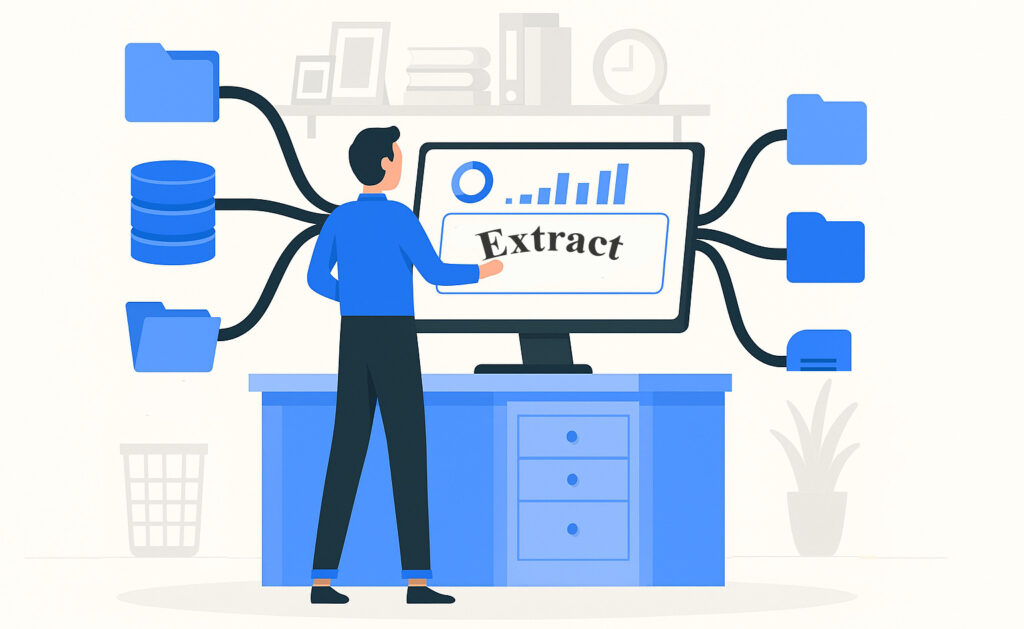
Due to differences in source architectures, this stage can be complex and may require custom connectors or logic. In practice, extraction is carried out using one of three methods:
- Full extraction is used when the system cannot track changes. All records are copied completely—both new and old.
- Partial extraction with notifications is used when the system can signal changes (e.g., via triggers or timestamps).
- Incremental extraction without notifications is a more complex method in which the system determines what has changed by comparing current and previous values.
In the ETL context, it is important to determine in advance which data should be extracted—since transformation and then loading follow immediately. ELT provides more flexibility: you can extract everything and postpone the decision about which data to use.
Data Transformation (Transform)
The second stage (for ETL) or third stage (for ELT) is data transformation — a critical process where data is prepared for use in the target system.
During this stage, the following actions may be performed:
- Removing noisy and duplicate values.
- Normalizing formats.
- Translating names and attributes.
- Aggregating, filtering, renaming fields.
- Encrypting sensitive information.
- Merging or splitting tables.
In ETL, transformations are performed before loading, outside the target storage — usually on a dedicated server. This approach is reliable but less flexible. If a new analytical scenario arises, you may need to rebuild the entire pipeline. This is especially true for systems with OLAP storages, which require strictly structured, SQL-compatible data formats.
The ELT method works differently. Here, all transformation takes place after loading, directly within the target platform: data warehouse, data lake, or lakehouse. This means that raw data remains available for multiple transformations and can be archived for as long as needed. SQL tools within the storage (including dbt, stored procedures, window functions) allow both engineers and analysts to perform transformations directly where the data lives. This makes ELT particularly convenient for modern distributed cloud platforms.
Data Loading (Load)
The final stage in ETL — and an intermediate one in many ELT implementations — is the physical loading of data into the target system. In ETL, this means already processed, clean data coming from the staging layer. Loading can occur in real time (via SQL queries like INSERT INTO) or in batch mode using scripts that import tens or hundreds of thousands of rows at once.
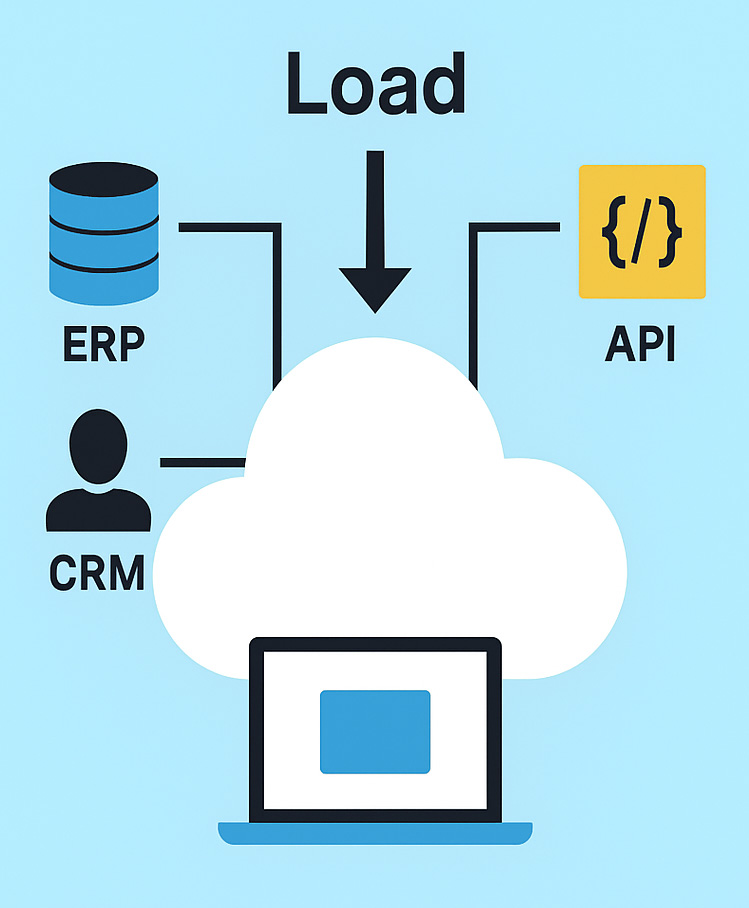
In ELT, data is loaded in its raw form directly into the storage, bypassing any intermediate processing. This speeds up the entire cycle, especially when data volumes are large and fast access to data is critical. Loading can be either full (a complete snapshot) or incremental, depending on the processing logic.
Comparison of ETL and ELT Processes
| Criterion | ETL (Extract → Transform → Load) | ELT (Extract → Load → Transform) |
|---|---|---|
| Stage order | Extract → Transform → Load | Extract → Load → Transform |
| Location of data transformation | Outside the target storage (on an ETL server) | Inside the target storage or data lake |
| Storage requirements | Strictly structured DWH (e.g., OLAP) | Scalable DWH, cloud platforms, data lakehouse |
| Analytical flexibility | Low: new scenarios require pipeline rework | High: raw data remains available for reprocessing |
| Loading speed | Data is loaded after transformation | Fast loading without prior transformation |
| Data volume | Suitable for small to medium volumes | Effective for large volumes (Big Data) |
| Implementation complexity | More setup, often uses visual tools | Often requires SQL, scripts, orchestration platforms |
| Input data quality control | Data is cleaned before loading | “Dirty” data is loaded and processed later |
| Performance | Limited by ETL server capacity | Depends on storage power (e.g., MPP, cloud) |
| Processing type | Batch processing | Both batch and streaming possible |
| Best suited for | Traditional BI systems, reporting, OLAP | Modern analytics, flexible data models, data science |
When to Choose ETL and When to Choose ELT
Although ETL and ELT serve similar functions, they are optimal in different scenarios. The right choice depends on project architecture, data volume and type, available infrastructure, and business goals. Below are key situations where one approach is preferred over the other:
| Scenario | Recommended Approach | Justification |
|---|---|---|
| Strict data quality and validation requirements before loading | ETL | Data is cleaned before entering the storage. |
| The storage is not designed for complex computations (e.g., traditional OLAP) | ETL | All processing happens outside the storage. |
| Working with sensitive data (PII, GDPR, HIPAA) | ETL | Allows encryption and masking before loading. |
| Using a cloud or distributed storage with high computing power | ELT | It is more efficient to process data “in place.” |
| Need to quickly load large volumes of unstructured data | ELT | Load first, process later. |
| Need flexibility in analytics and ad hoc queries | ELT | Raw data is available for re-analysis. |
| Working with BI systems requiring strictly structured input data | ETL | Provides a ready-made structure for visualization. |
| Need high dashboard update speed (data freshness) | ELT | Processing can occur almost in real time. |
Tip! In practice, a hybrid approach is often used — some data goes through ETL (e.g., sensitive personal data), while other data follows ELT (e.g., user behavior events from a website).
Conclusion
The differences between ETL and ELT are not just about the order of stages — they reflect the evolution of data processing approaches. ETL has proven itself as a reliable solution for classic BI systems where a strict structure, preliminary data cleansing, and thorough validation are essential. ELT, on the other hand, is a response to modern challenges: large data volumes, cloud storages, flexible analytics, and the need for fast decision-making.
In today’s world, there is no one-size-fits-all approach. It all depends on your goals:
- Need regulatory reporting and clean data — go with ETL.
- Want to scale cloud analytics and analyze user behavior in real time — ELT is a better fit.
- Building a hybrid system? Use both approaches, distributing the load between storage and transformation layers.
Understanding the nuances of ETL and ELT helps build an efficient data architecture, reduce costs, improve report accuracy, and accelerate decision-making. Regardless of the method chosen, the ultimate goal is the same — to make data accessible, high-quality, and valuable to the business.